A Doctor, Alone
In Tweespruit Morris Hirsch began his career as a doctor and he was quite alone as a doctor.
In Tweespruit Morris Hirsch began his career as a doctor, quite alone. He undertook surgical procedures he had never done or even watched.
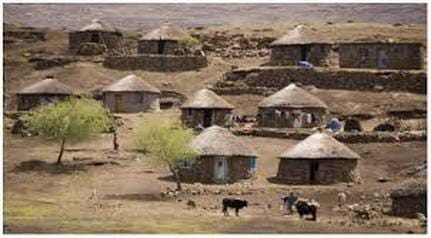
The most dramatic call was to an African grass hut. A midwife granny had delivered the baby. But the placenta (afterbirth) was retained in the uterus. She was bleeding steadily. He knew it would not stop until the placenta was completely removed. The patient lay on a reed mat on the dirt floor. There was no running water and only a 'rag and bottle' chloroform anesthetic. No anaesthetist, no intravenous line or oxygen, suction or blood on hand for transfusion. Was intrauterine manipulation justified? He had never faced a life-threatening obstetric complication.
'He who hesitates is lost' he told himself. The patient would bleed to death.
The husband and midwife granny gave their consent in 'fanagalo' (Zulu patois used on the mines) and sign language. He put the patient to sleep showing her husband the simple drip-drip application of chloroform and how to keep the chin up and the airway open.
He did his best to wash his hands in a cracked enamel washbasin, trusting the dettol (topical antiseptic) would cope with bacteria. As his fingers groped for the adherent placenta, he vividly recalled Professor Gordon Grant saying to shave the placenta off the uterine wall with the side of one's hand, and resist the temptation to pick it off with one's finger tips. Finding the right layer was soon obvious. The separation proceeded cleanly as Gordon Grant had said it would. The adherent part of the placenta had prevented the uterus from contracting down to end the bleeding. 'Yavoll'! the bloody tap turned off dramatically as the placenta was delivered.
Husband and granny were elated but they were ignorant of the post interference danger of puerperal sepsis. Morris' knees were hurting but he was elated too.
Two days later, he found the new mother walking around doing her 'chores' as if nothing had happened! In time he would come to appreciate how well Africans could withstand the loss of blood.
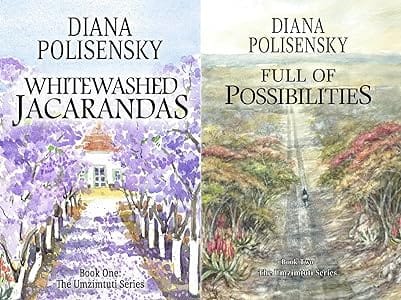
The historical novel Whitewashed Jacarandas and its sequel Full of Possibilities are both available on Amazon as paperbacks and eBooks.
These books are inspired by Diana's family's experiences in small town Southern Rhodesia after WWII.
Dr. Sunny Rubenstein and his Gentile wife, Mavourneen, along with various town characters lay bare the racial arrogance of the times, paternalistic idealism, Zionist fervor and anti-Semitism, the proper place of a wife, modernization versus hard-won ways of doing things, and treatment of endemic disease versus investment in public health. It's a roller coaster read.
References:
Excerpt from Dr. Morris Isaac Hirsch's Unpublished Memoirs. Hirsch Archives.
Photo: Freestate native huts.jpg