Battling in the Theater...and War
On Sunday September 3, 1939, Chief Surgeon Pencharz and Morris Hirsch battled to close a rent in the carotid artery of the victim of a stabbing assault at the Non-European Hospital.

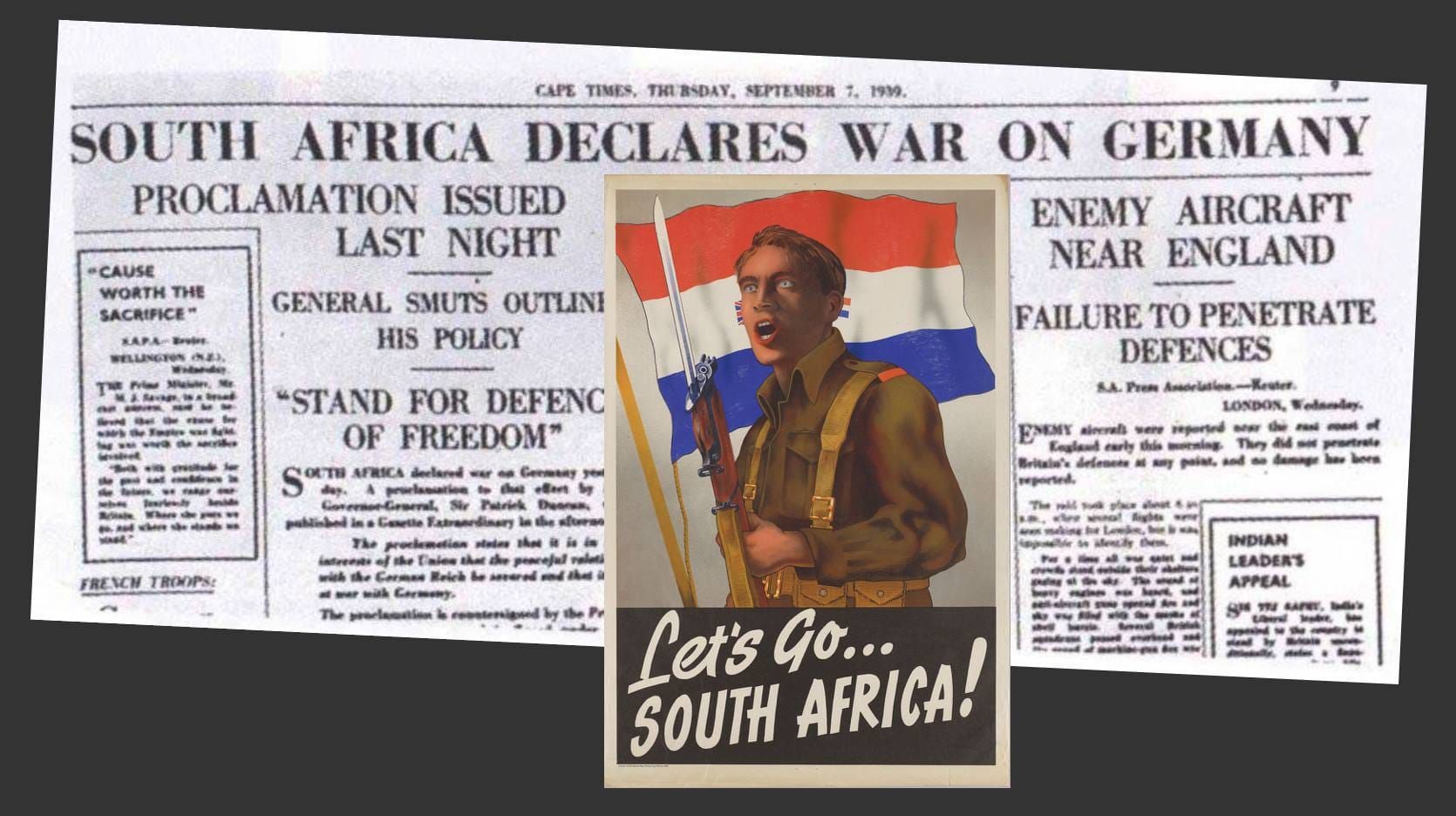
On Sunday September 3, 1939, Chief Surgeon Pencharz and Morris Hirsch at the Non-European Hospital battled to close a rent in the carotid artery of the victim of a stabbing assault. While in the throes, a houseman (intern) dashed in to announce excitedly that war was declared. He rushed out without being aware of the desperate battle Pencharz and Morris were waging. The patients collapsed state compelled them to staunch the bleeding with a tight pack as a temporary measure. Repair would be attempted when the patient was in a fit state and adequate blood was on hand.
The ward sister was given strict instructions that the dressing was not to be disturbed by anyone. But the nursing staff were still imbued with the false cleanliness dogma that dressings must be changed daily. Sure enough, a conscientious nurse doing the round of dressings got the bloody shock of her life before half the pack was removed. Fortunately Morris was nearby. He temporarily saved the day, maintaining pressure over additional pack all the way to the theater until Pencharz arrived. Sadly, but not unexpectedly, the patient succumbed the next day.
The refinements of vascular surgery was a postwar advance that flowed from the war experience. They had neither the instruments, suture materials nor the techniques that established the successful discipline. The contrast hit home when four decades later Morris marveled at the exploits of the brilliant vascular surgeon, Hymie Gillis, whom he was privileged to assist for a period. In Gillis' hands he would have been saved, and by initial repair before any unfortunate nurse had a chance to wreck the prognosis.
It seemed that Prime Minister Hertzog would keep South Africa neutral. However, in Parliament he departed from his written speech. It became obvious that actually he was pro-Nazi. He narrowly lost the vote and split from the United Party. Deputy Prime Minister Jan Smuts became Prime Minister for the second time on September 6, 1939. Smuts, though decisive in his support of Britain, had to tread warily. Conscription would inflame the opposition. Service beyond South Africa's borders was declared a volunteer option. Morris Hirsch signed up immediately. But to his disappointment he was not called for basic training.
Waiting impatiently, Morris' next houseman appointment was Urology, considered a relegation. Still, he was optimistic his call would come in a matter of days. However, the phoney war in Northern France and Belgium continued until May 1940.
He didn't doubt he'd survive the war as a doctor. His father particularly, and his mother, had other ideas. They argued, "You aren't obliged to serve."
"I want to serve."
"There are many safer ways to contribute."
"I want to broaden my horizons."
"You are our only son! Did we not scrimp and save to afford you your university experience?"
"I am grateful for your sacrifice."
"Have you considered that you might have to care for us in our old age?"
His father appealed to Dr.Henry Gluckman MP, Minister of Health, whom he knew well, having assisted in his election campaign, to no avail.
He wrote to Morris, You've always acted against our wishes and showed little concern for the family.
But Morris was determined to do his bit for Freedom.

The historical novel Whitewashed Jacarandas and its sequel Full of Possibilities are both available on Amazon as paperbacks and eBooks.
These books are inspired by Diana's family's experiences in small town Southern Rhodesia after WWII.
Dr. Sunny Rubenstein and his Gentile wife, Mavourneen, along with various town characters lay bare the racial arrogance of the times, paternalistic idealism, Zionist fervor and anti-Semitism, the proper place of a wife, modernization versus hard-won ways of doing things, and treatment of endemic disease versus investment in public health. It's a roller coaster read.
References:
Excerpt from Dr. Morris Isaac Hirsch's Unpublished Memoirs. Hirsch Archives.
Newspaper cutting: The Observant Post. South African Military History: 20507290_10155341525171480_3598082253332318798_o