Cut Out or Drain?
Looking back, Morris Hirsch's pride and boast of his ENT record fades in the light of subsequent medical advances and changed medical thinking.
Morris Hirsch was buoyant.The Consultant Head of the Department, Dr. Friedman, offered to sponsor him to specialize in and in due course join him in practice. But he couldn't visualize himself looking down throats and ears for a lifetime. The prospect seemed too far in the future. In retrospect he failed to anticipate the interesting advances to come. But he had no regrets nor gave it further thought. He became adept at the arbitrary and wholesale removal of tonsils, adenoids and routine surgery for many nasal and sinus problems.
In those pre-antibiotic days, pathological processes weren't well understood and surgical techniques were limited. Infection, recurrence and chronicity were major problems.
It was the era of extending the range of -ectomies (excision of organs) or -ostomies (drainage) when excision was not feasible or inappropriate or dangerous. Hence tonsillectomy, adenoidectomy, mastoidectomy, gastrectomy, cholecystectomy, mastectomy .... and antrostomy (drainage of a sinus) myringotomy (of the middle ear) cholecystostomy (of the gall bladder)....The dicta: when an organ was considered too diseased, cut it out; where there is pus or obstruction, drain it.
These dicta are, of course, still basically valid today but the deterioration warranting the procedures is now largely prevented, especially in respect of infections, or managed by other means much earlier, or compensated for by a transplant. An -ectomy was the routine radical remedy for malignancies (cancers) with X-ray therapy an adjunct, with horrendous consequences at times. The destructive surgery was a matter of what else could one do? Reconstructive procedures were almost limited to plastic surgery only. Corneal grafting was the only transplant.
In time, Morris kept narrowing the indications for surgical intervention. How medicine has evolved in one medical lifetime!
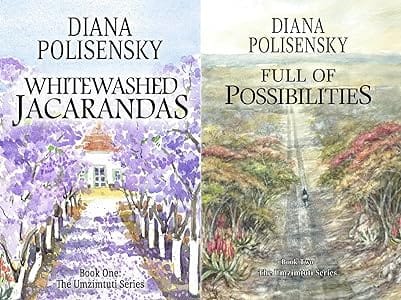
The historical novel Whitewashed Jacarandas and its sequel Full of Possibilities are both available on Amazon as paperbacks and eBooks.
These books are inspired by Diana's family's experiences in small town Southern Rhodesia after WWII.
Dr. Sunny Rubenstein and his Gentile wife, Mavourneen, along with various town characters lay bare the racial arrogance of the times, paternalistic idealism, Zionist fervor and anti-Semitism, the proper place of a wife, modernization versus hard-won ways of doing things, and treatment of endemic disease versus investment in public health. It's a roller coaster read.
References:
Excerpt from Dr. Morris Isaac Hirsch's Unpublished Memoirs. Hirsch Archives.
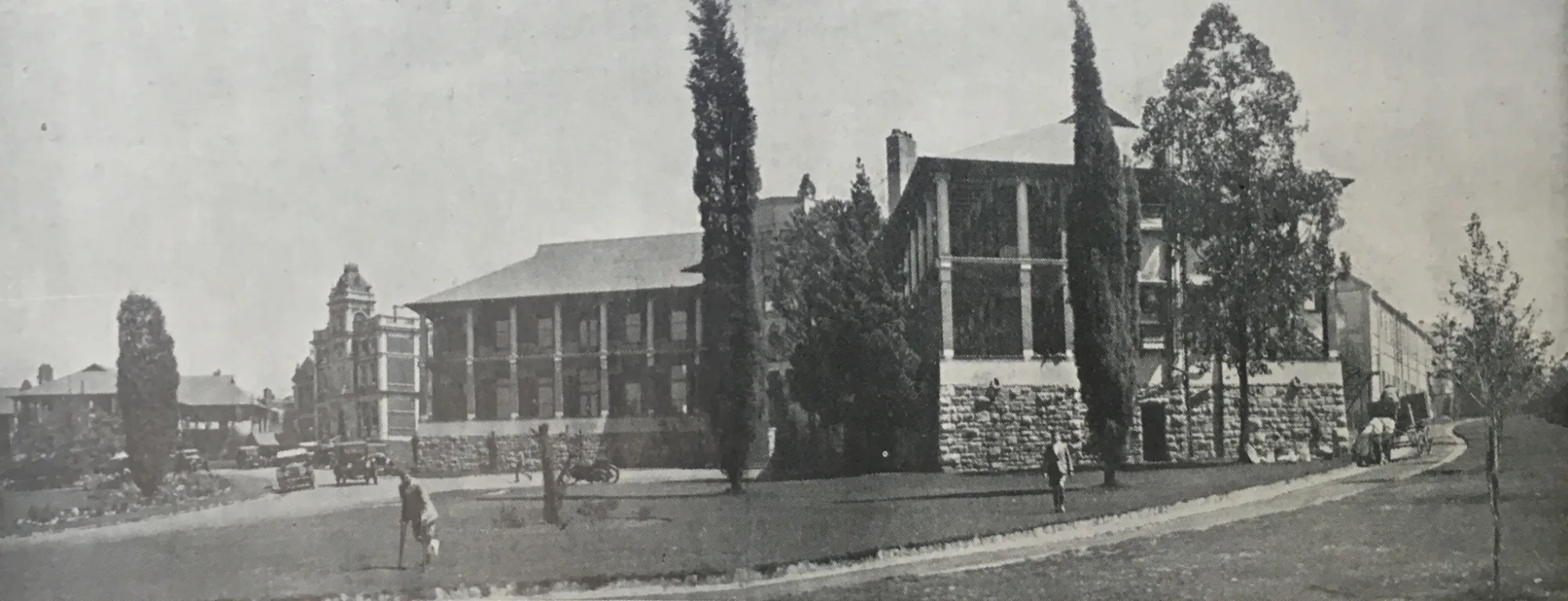
Photo: https://johannesburg1912.com/2016/01/02/hospital-hill-old-suburb-between-braamfontein-hillbrow/