Heavy Work, Long Hours and Great Responsibility
Morris Hirsch's rotation in the Otorhinolaryngeal (Ear, Nose & Throat - ENT) department, again covering the wards both in the European and Non-European hospitals, was a tall order after the Ophthalmology department.
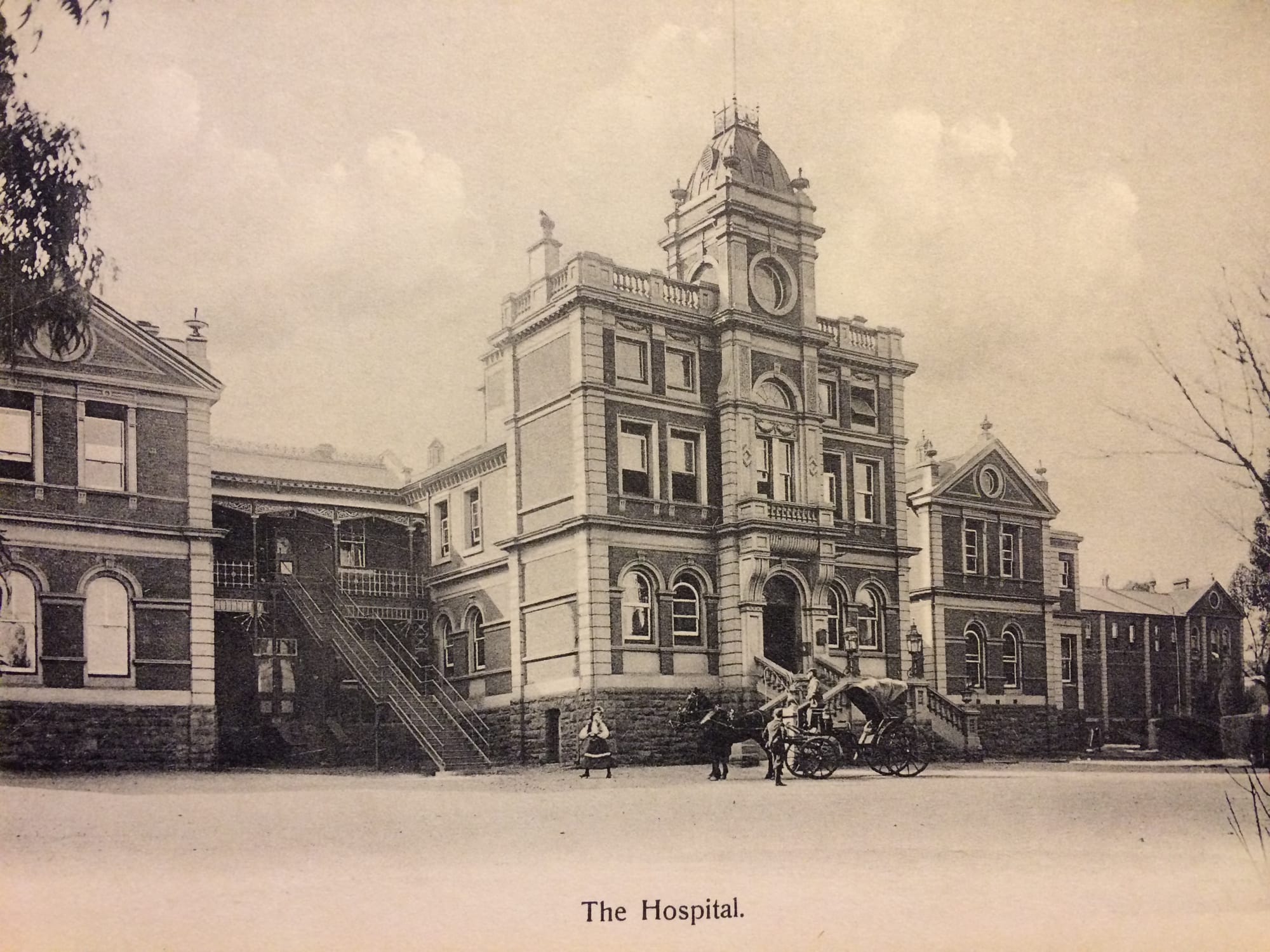
Morris Hirsch's rotation in the Otorhinolaryngeal (Ear, Nose & Throat - ENT) department, again covering the wards both in the European and Non-European hospitals, was a tall order after the Ophthalmology department. The work was heavy, the hours of duty long and the responsibility great. The busy Chiefs showed little interest in the Native section, visiting only when called, usually for operating in cases where the houseman lacked confidence.
Morris was fortunate to have an able mentor, a Scot, Dr Kerr, who also had compassion for Non-Europeans. He taught Morris how to handle the scope work—looking down into the larynx, trachea and down to the bronchi; and down the oesophagus to the stomach. Scopes were rigid, made of chrome steel, not the flexible plastic joys of today!
From him Morris learnt to perform a mastoidectomy (clearing the mastoid process, the bony prominence behind the ear, of its infected cellular and bony tissue)–the means to deal radically with the common and serious complication of otitis media (middle ear abscess) if not drained early enough was a common occurrence in the Natives at the time.
Operating volume was high in those pre-antibiotic days, because the ravages of infection necessitated excision or drainage. His second day at the Native hospital was the ENT operating day. The previous houseman (intern) had booked a list of tonsillectomies and adenoid curettes as well as some lesser procedures, proof puncture of the maxillary sinuses and removal of nasal polypi. Not only had Morris never performed any of them but had never seen them done! No Chief was available.
When he went to cancel the list, the theater sister (senior nurse) reassured him. She would guide him through the session! He had nothing to fear. It was a dare and a challenge that he, as usual, couldn't resist–daunting but, he reasoned, she would not be party to unjustifiable risk.
By the end of the session he was confident and elated. It was an auspicious start to what proved to be a happy and effective housemanship (internship). During the three months, he performed hundreds of operative procedures, a list of eight or more cases on each of the theater days twice a week. Although sometimes he thought he'd fallen short of perfection, he became slick and quick. He designed and had made a single instrument for two minute tonsillectomies!
When the case list was long, they would anesthetize a patient in the passageway, while operating proceeded in the theater (operating room), but sometimes, hemorrhage caused delay.
Morris' instances of post-op bleeding, he thought compared favorably with the Chiefs' on the European side. When certain of them operated Morris knew that he would be up that night taking the patient back to theater. There were no fatalities. He was always able to cope, sometimes with a blood transfusion. Hemorrhage from a tonsil bed was always harrowing.
The assistant nurse to the theater sister was Joan Sullivan, who called herself the theater 'skivvy'. Morris liked the theater staff but had a rule of not mixing socially. Making an exception, at the end of his ENT spell he took both the theater sister and the skivvy to the cinema. He married the skivvy in 1943.

The historical novel Whitewashed Jacarandas and its sequel Full of Possibilities are both available on Amazon as paperbacks and eBooks.
These books are inspired by Diana's family's experiences in small town Southern Rhodesia after WWII.
Dr. Sunny Rubenstein and his Gentile wife, Mavourneen, along with various town characters lay bare the racial arrogance of the times, paternalistic idealism, Zionist fervor and anti-Semitism, the proper place of a wife, modernization versus hard-won ways of doing things, and treatment of endemic disease versus investment in public health. It's a roller coaster read.
References:
Excerpt from Morris Isaac Hirsch Memoirs, Hirsch Archives.
Photo: https://johannesburg1912.com/2016/01/02/hospital-hill-old-suburb-between-braamfontein-hillbrow/