Medical Corps Training
Morris Hirsch found his training at Sonderwater was just playing soldiers, an anticlimax to the great world drama and even compared to the accelerating tempo of South African mobilization.

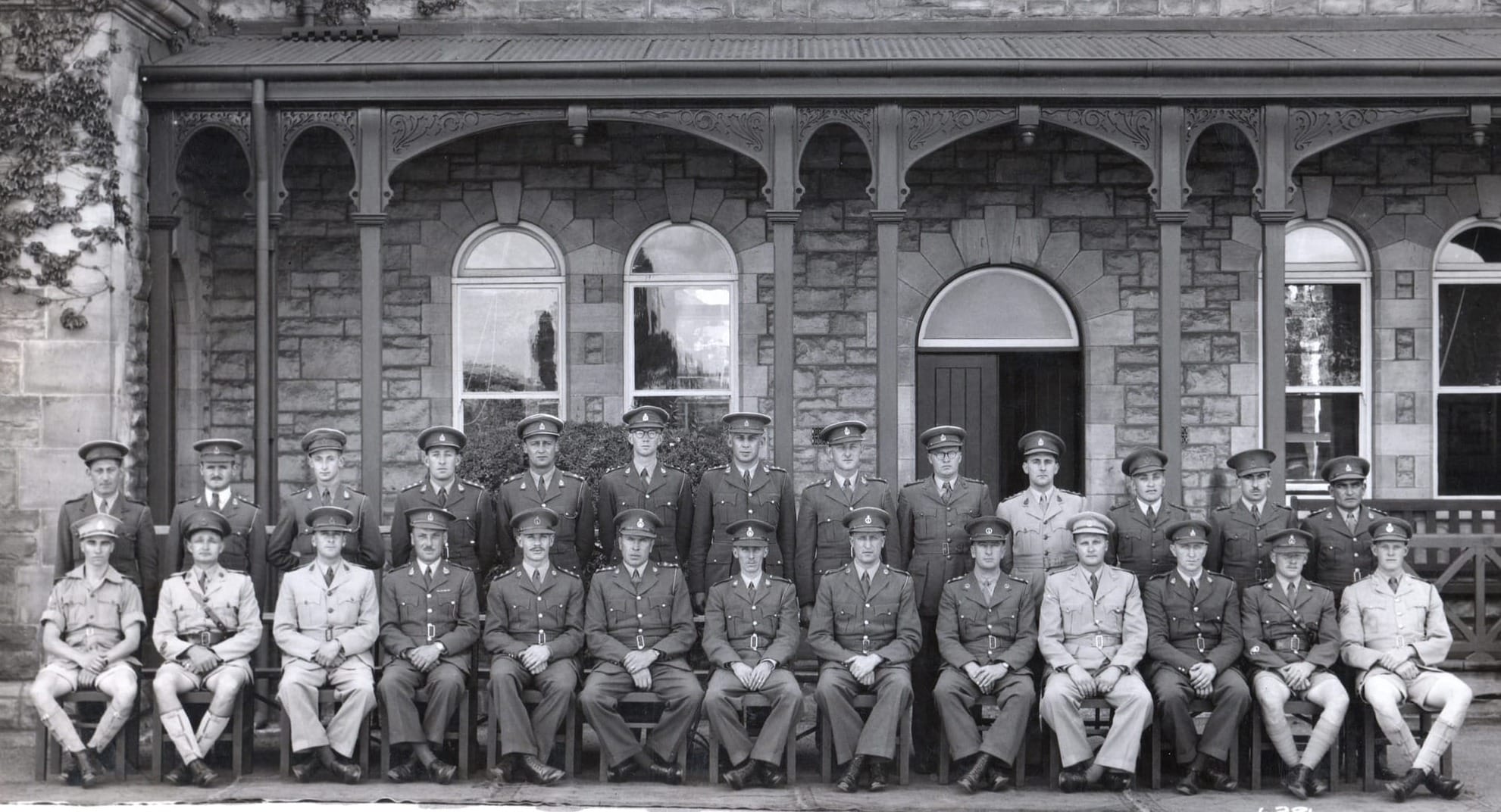
But the Army intended to discipline doctors used to being a law unto themselves. In the Chain Gang, they were all put on an equal footing: young graduates fresh from housemanships (internships) alongside middle aged and older specialists and academics; lieutenants to be and majors with years of part-time army involvement and even a lieutenant colonel. Some were fit, tireless men in their prime and some worn old smokers, puffing before they got to the double. During the day they all wore formless khaki long pants and a cross between a shirt and jacket with no insignia, topped by a variety of slouch hats.
So the Permanent Force Staff Sergeants and Sergeants who drilled and trained them had plenty of opportunity to exercise their sense of humor. But of course they knew authority and deference would be reversed, all too soon.
"Get a bloody move on. Are you too damn lazy to move your feet....SIR?
"Don't you know your right from your left? Shall I tie a ribbon on your right.... SIR?"
They pounded the parade ground to yells of left right, left right; practiced company drill, took turns to direct the drill and conduct a parade--such a pantomime; learned flag raising and lowering ceremonies. They had PT (physical training) early every morning.
They were enlightened about rank protocol and etiquette; on medical corps structure and procedures; on medical officer, adjutant and orderly officer duties; on army hygiene, nutrition and preventive medicine. They were instructed in weaponry and its medical corps limitations and in gas drill and much else. The syllabus was packed full. When they emerged with a formal tailor-made uniform with two pips up and cap, baton and the Smith and Wesson .38 sidearm, they felt they had earned it and were impatient to serve.
But much to their chagrin, most of the Gang were informed that they were not needed immediately and would be called up in due course.
Back to civvy street! Once again what could Morris do? Having resigned from the Germiston Hospital in the belief that the army was his next posting, there was no going back there, nor to Johannesburg Hospital after his altercation with the hospital superintendent on leaving.

The historical novel Whitewashed Jacarandas and its sequel Full of Possibilities are both available on Amazon as paperbacks and eBooks.
These books are inspired by Diana's family's experiences in small town Southern Rhodesia after WWII.
Dr. Sunny Rubenstein and his Gentile wife, Mavourneen, along with various town characters lay bare the racial arrogance of the times, paternalistic idealism, Zionist fervor and anti-Semitism, the proper place of a wife, modernization versus hard-won ways of doing things, and treatment of endemic disease versus investment in public health. It's a roller coaster read.
References:
Excerpt from Dr. Morris Isaac Hirsch's Unpublished Memoirs. Hirsch Archives.
Photo: Hirsch archives.