The Empire Restored
Commander-in-Chief of the Middle East, General Sir Archibald Wavell commanded a vast area covering nearly 4.5 million square miles, at the start of the war. He described his southern flank, East Africa, as “an improvisation after the British fashion rather than a set piece in the German manner.”

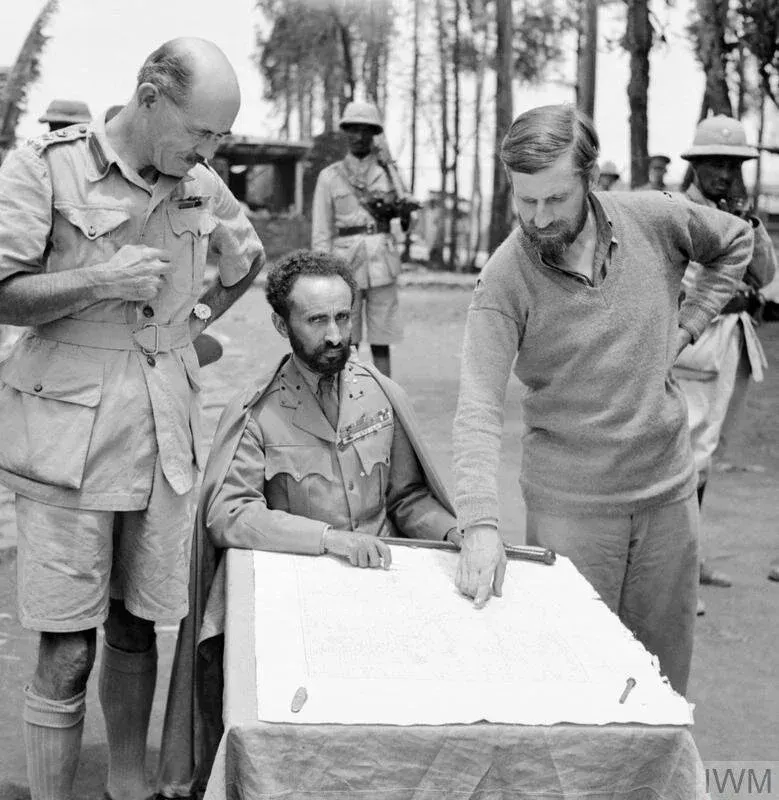
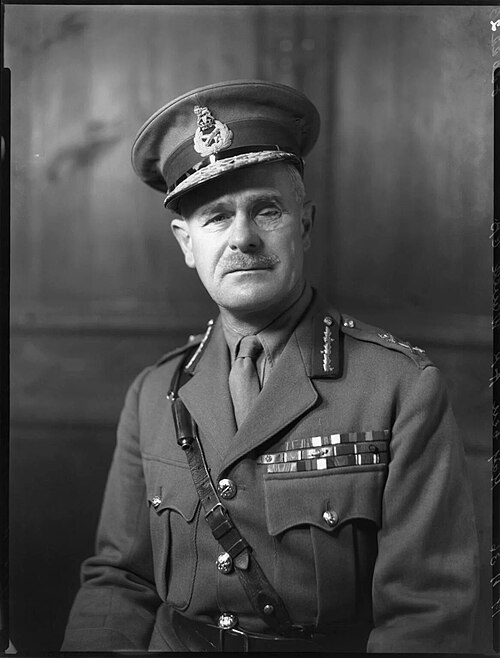
Finally, in May 1941, two forces, supported by Patriots (irregular guerrillas, otherwise known as the Arbegnoch) converged in a pincer movement on the Italian fortress of Amba Alagi after the fall of the capital of Abyssinia, Addis Ababa.
A force of 1700 British, Sudanese, Ethiopian soldiers and even volunteers from the Zionist Haganah and thousands of Patriots advanced from Sudan. It was named the Gideon Force by Col. Orde Wingate in reference to the 300 men in the book of Judges who defeated the massive Midianite army. They moved behind Italian lines and saw to the surrender of 20,000 Italian troops.
General Archibald Wavell appreciated Wingate's unorthodox tactics. He was loved by the Patriots (and later on, the Chindits in Burma). He believed, quite openly, in his own superiority and was loathed by his fellow officers whom he freely criticized in official reports. Wearing a necklace of fresh onions and garlic to ward off mosquitoes, not surprisingly he had a body odor! He ushered guests into his command tent while stark naked another exceptional eccentricity that Wavell ignored. He saw to Wingate's promotion. Churchill also liked Wingate's ideas of deep-penetration missions. (Wingate reached the rank of Major General before his death on March 24th, 1944 when his plane crashed into the jungle in northwest India.)
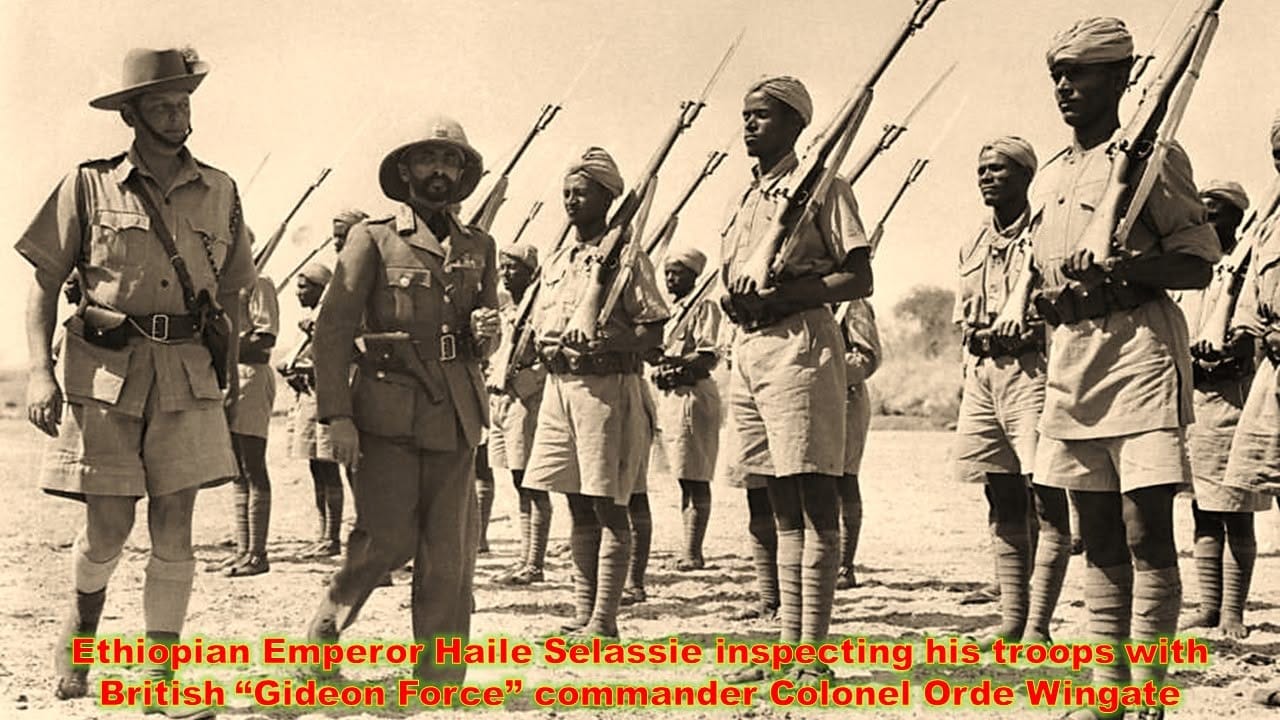
The Italian garrison, intimidated, abandoned Fort Dambacha. This opened the strategic route to the regional center of Debra Markos and on to Addis Ababa. Behind them trailed great quantities of arms and ammunition to supply the Rases (feudal lords) and their people. Addis Ababa was still 200 miles away.
The Rases traditionally feuded with each other. Ras Hailu wanted to negotiate only with Wingate. An officer wrote, “Only a man who from his youth played the game of patience with long-term strategies of a cool head could have shown the forbearance that Haile Selassie now displayed.”
Rapidly approaching Addis Ababa through loyal territory, Haile Selassie could not keep up with Wingate. “You go ahead Colonel Wingate” he said, “and let us hope the people will recognize which of us is the emperor.”
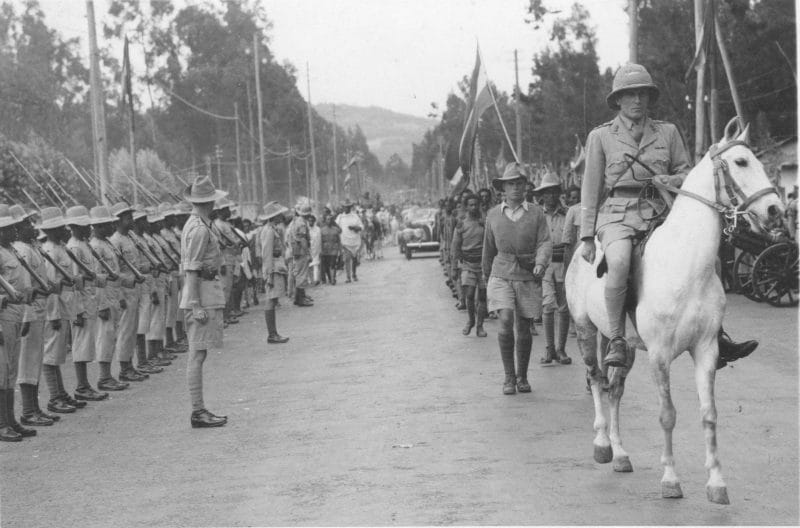
The Emperor reached the green hills of Entoto and looked down on his capital city. Ironically, he was the last to enter it. Deeply religious, he believed the British served the inscrutable but infallible ways of the Lord. He said, “My people, do not repay evil with evil … do not stain your souls by avenging yourselves on your enemies …”
The Duke of Aosta, the Italian commander, retreated to the fortress of Amba Alagi and was beseiged on the 5th May. Two weeks later he surrendered. Most of the regular troops departed for North Africa, leaving Gondar on the alternative main route to Asmara still in the hands of the Italians at the beginning of "The Big Rains".

References:
Gideon Goes to War, by Leonard Mosley
Photos:
https://www.warhistoryonline.com/author/colin
https://www.warhistoryonline.com/instant-articles/orde-wingate-eccentric-daring-unconventional-fighter-against-the-japanese-m.html
The historical novel Whitewashed Jacarandas and its sequel Full of Possibilities are both available on Amazon as paperbacks and eBooks.
These books are inspired by Diana's family's experiences in small town Southern Rhodesia after WWII.
Dr. Sunny Rubenstein and his Gentile wife, Mavourneen, along with various town characters lay bare the racial arrogance of the times, paternalistic idealism, Zionist fervor and anti-Semitism, the proper place of a wife, modernization versus hard-won ways of doing things, and treatment of endemic disease versus investment in public health. It's a roller coaster read.
References: Morris I. Hirsch unpublished memoirs. Hirsch Archives.
Also:
https://www.warhistoryonline.com/instant-articles/orde-wingate-eccentric-daring-unconventional-fighter-against-the-japanese-m.html
Photos: Hirsch Archives
Also: