The Patriots Fight for Gondar
Last week's account of the battle of Gondar was drawn from official sources and Morris Hirsch's brief memoir. The Patriots barely get a mention and the battle is apparently a tidy undertaking.

However, a British army officer, René Cutforth, was attached to a large force of Patriots. This is his account of that day and night.
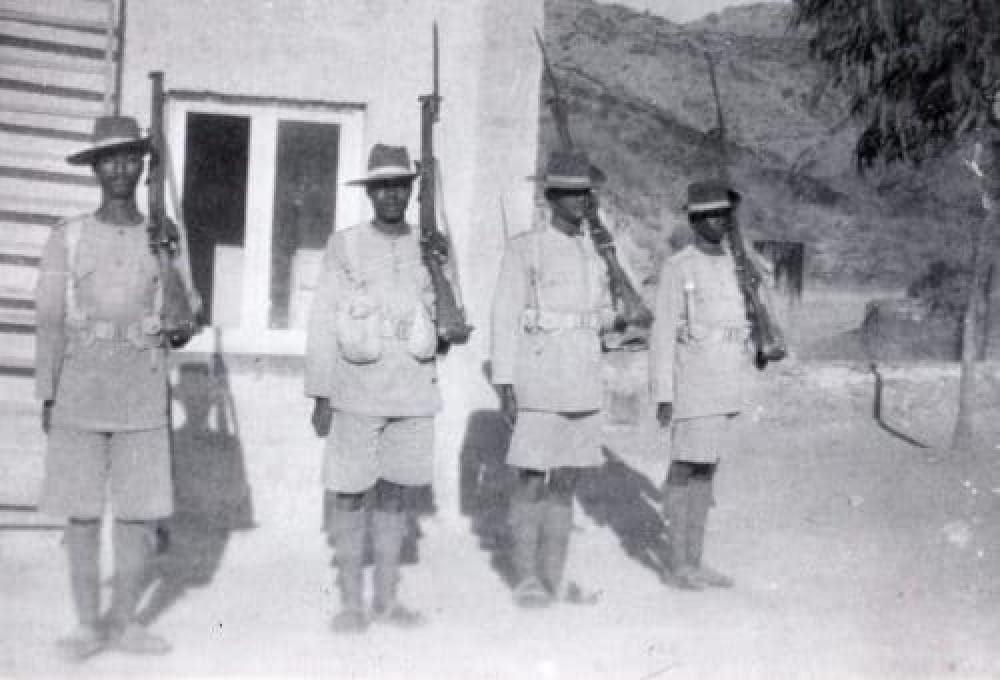
They had helped the Kings African Rifles (KAR) cut off the mountain passes around the city, and were given the honor of entering Gondar first. Their advance was planned in tandem with the KAR, in case a restraining influence was required. That was the plan.
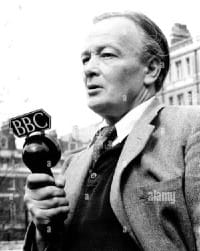
But the KAR got stuck in a minefield just before the ridge above Gondar and were caught in Italian artillery fire. The general in the minefield was in touch with René Cutforth on the heights at 6000 feet. Instructions came through loud and clear: "On no account must your forces fall upon Gondar until I clear the minefields."
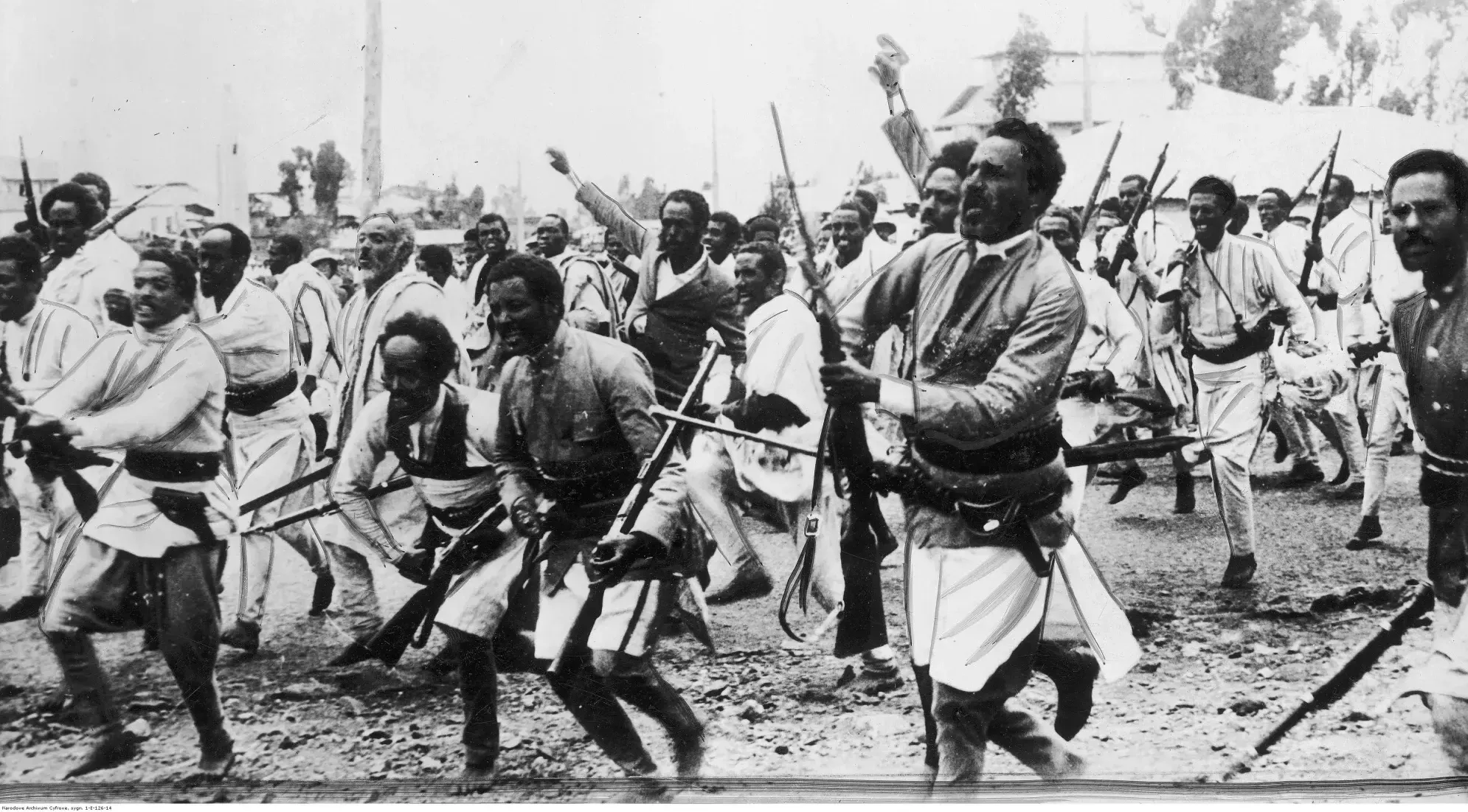
They massed in the open, in the dark. They built a dry stone wall behind which they lay and waited for dawn, their teeth chattering. For three days and nights they held back, fidgeting and fuming. Gondar was spread out below them with its superb stone fort, Fasil Ghebbi. After the third night, the Ethiopian captain put his boot through the radio set at dawn. They were off. Tension gave way to a charge of almost unbelievable and excessive velocity, with complete disregard for taking cover. It was as if a long line of leopards suddenly saw their prey. They had their rifles, but their preferred instrument of slaughter was a panga (machete), 2 1/2 feet long. A small group of British officers followed them into Gondar.
On their way down, the British officers encountered what had been a horse and cart and two Askaris (Abyssinians in the Italian service). The mess was littered for hundreds of yards.
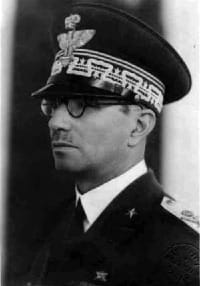
Although the Italian troops fought hard, the Patriots gained the upper hand fairly swiftly. There was chaos in Gondar, as some of the Patriots began drinking heavily, while the Italians started setting fire to their stores. The fighting in the city was one long, bloody fury, like a football crowd gone mad. By 3 o'clock in the afternoon nothing was left in Italian hands but the great, stark fortress. The rest of Gondar was one huge, sprawling fight. No one, it seemed, was in control of anybody. Most of the Patriots were already drunk, and in the middle of this swirling confusion General Nasi, the Italian commander, who had done his own share of hand to hand fighting that afternoon, suddenly surrendered the city to a British officer he came to face to face with on the steps of Banka Italiana.
It was a wise move. Nobody else had any chance of preventing a general massacre. The General had to yell to make himself heard above the frightful din. "I surrender," he shouted three or four times before it penetrated. Then he said he was sorry he had no Union Jack to hoist over the town!
The Patriots continued their drunken rampage even after the Italian surrender. For safety, the few British troops and their Italian prisoners had to retreat into the old Fortress. On his way there, René Cutforth was mistaken for an Italian. "I spent an uncomfortable half hour arguing at rifle point with a couple of drunks who wanted to take me a prisoner."
Taking prisoners was new to the Patriots, but word had already gone around that there was to be a grand parade after the victory. Since the Italians always paraded their prisoners, they wanted some prisoners to parade, "in chains" they ecstatically chanted--anyone would do.
The British and their surrendered Italians only got into the fortress by the skin of their teeth. Straining against the mob, they slowly managed to shut the great gate. The Italians had five armored cars and all the petrol in Gondar in jerry cans piled up in a mountain, which overtopped even the high outer wall.
At nightfall, a British officer was rash enough to mount the pile of petrol cans and make a speech to the screaming mob outside. This was a mistake. They all let off their rifles at once at the officer, who wasn't hit, but Cutforth could hear there were casualties among the drunks. One of the petrol cans was holed, and there were cooking fires at the far end of the compound. Somehow the petrol, that smelled so strongly that they hardly dared to breathe, didn't explode. They spent the whole night inside the Fortress.
At midnight, the Italians had a message to say that the compound of the Convent of the Sacred Heart, 3 miles away, in which the sisters had elected to stay, was besieged by a drunken mob with rifles. So the British officers did probably what they aught to have done much earlier and co-opted the armed cars with volunteer Italian drivers. They opened the gates and fired the machine guns over the heads of the mob as they drove into it.
It took a long time to reach the Convent of the Sacred Heart and bring the nuns back in an armored truck in convoy. They'd not been harmed. The Patriots had broken all the glass in the place but had baulked at the entrance. They were Christians. Nobody had dared set a foot inside.
The nuns were sensible: "What heads they will have in the morning," they said. With the dawn peace arrived. The benevolent sun shone only on recumbent forms: the dead and the dead-drunk, but in their thousands, the dead and the dead indistinguishable.

The historical novel Whitewashed Jacarandas and its sequel Full of Possibilities are both available on Amazon as paperbacks and eBooks.
These books are inspired by Diana's family's experiences in small town Southern Rhodesia after WWII.
Dr. Sunny Rubenstein and his Gentile wife, Mavourneen, along with various town characters lay bare the racial arrogance of the times, paternalistic idealism, Zionist fervor and anti-Semitism, the proper place of a wife, modernization versus hard-won ways of doing things, and treatment of endemic disease versus investment in public health. It's a roller coaster read.
References:
Full BBC Pod Cast: www.bbc.com/audio/play/w3ct1x5l presented by Simon Watts BBC World Service is an interview with René Cutforth, who, after service in the East African and Western Desert campaigns in WWII became a distinguished war correspondent.
Reviewing one of Cutforth's television programmes entitled The Forties Revisited, the critic Clive James wrote in The Observer: "Cutforth is that rare thing, a front man with background...his voice sounds like tea-chests full of books being shifted about."
British Movietone News: youtube.com/watch?v=75XyseCEb_Q&t=3s
Photos:
KAR: Hirsch Archives
Rene Cutforth www.alamy.com/rene-cutforth-bbc-correspondent-october-5-1954-image702110216.html
The Patriots via Wikimedia Commons
Generale Guglielmo Nasi //en.wikipedia.org/wiki/Guglielmo_Nasi
British Movietone News Reel: youtube.com/watch?v=75XyseCEb_Q&t=3s