The Potato King
The antisemitic myth that Jews were only good at trade or money lending, had been confirmed historically by the Polish experience where Jews were banned from farming because they were too successful!

Tweespruit was the home of South Africa's potato king, J.B. Lurie: He was the counterpart of Miller, South Africa's mealie king in the Eastern Transvaal, who was also Jewish. (Mealies are called corn in America.)
Lurie's farm was Morris Hirsch's first contact with industrial farming. The farm exceeded the Tweespruit village in size and amenities and was self-contained. It was orderly and functioned without fuss. It was run by the family with the founder, born in Lithuania still in charge. (Morris' parents also came from Lithuania, as did most of the Jewish community in Johannesburg.)
It was a joy to drive through its village hub, the expanse of green croplands yet to be harvested and the mass of healthy livestock on the lush veld in summer green. Lurie's farm held first place over the competing McPherson clan's spread.
Close by, the village of Westminster had been founded by the Duke of Westminster to settle English farmers in the area. They were still there attending their club. Morris was well received and enjoyed tennis, a break from the loneliness of the house.
Being on call he couldn't explore the beauty of the undulating and verdant countryside that led to the mountains of Basutoland. Only once did he visit the neat and attractive village Ladybrand on the border, which was Afrikaans and very Nationalist.
This introduction to the practical medical world left Morris somewhat cynical of general practice life. Apart from the occasional drama in which he could make a difference, so much seemed to be posturing or ritual, providing little more than moral support and comfort, which was important but unsatisfying. It made him more set on specializing in surgery, a broad specialty–preferably plastic surgery.
As Hanukkah comes to an end I hope all who have celebrated have found happiness in the gathering of family and friends and had your fill of latkes and apple sauce in remembrance of the miracle.
Christmas is here! I wish for everyone a gathering of loved ones from near and far as you share the magic of the season.
And for all I wish the very best of health in the coming year.
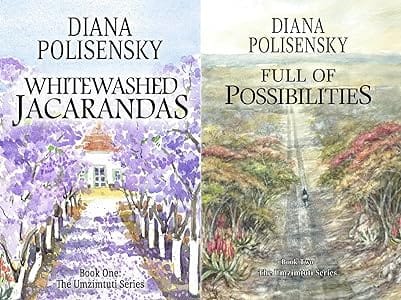
The historical novel Whitewashed Jacarandas and its sequel Full of Possibilities are both available on Amazon as paperbacks and eBooks.
These books are inspired by Diana's family's experiences in small town Southern Rhodesia after WWII.
Dr. Sunny Rubenstein and his Gentile wife, Mavourneen, along with various town characters lay bare the racial arrogance of the times, paternalistic idealism, Zionist fervor and anti-Semitism, the proper place of a wife, modernization versus hard-won ways of doing things, and treatment of endemic disease versus investment in public health. It's a roller coaster read.
Excerpt from Dr. Morris Isaac Hirsch's Unpublished Memoirs: Hirsch Archives.
Photo reference: https://www.explogrow.com/case-studies/limpopo-potato-farmer-crushes-60-year-record-w-organic-bio-fertiliser
Further reading: Article in Farming in South Africa, June 1928 chrome-extension://efaidnbmnnnibpcajpcglclefindmkaj/https://journals.co.za/doi/pdf/10.10520/AJA00148490_873