The Resuscitation of Gondar Hospital
The entire 6th Ugandan Field Ambulance moved 300 miles south to Gondar, below which 'B' Company had been stationed while it was besieged by the Commonwealth forces. The Field Ambulance was to enable the demilitarization of the last area of Italian occupation.

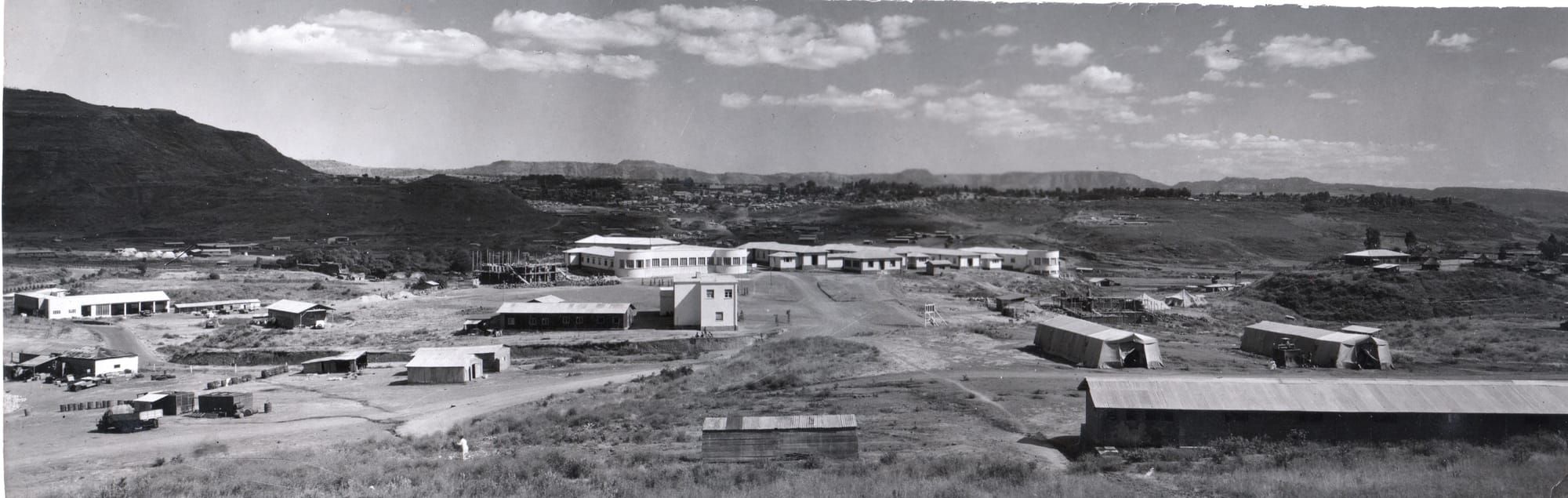
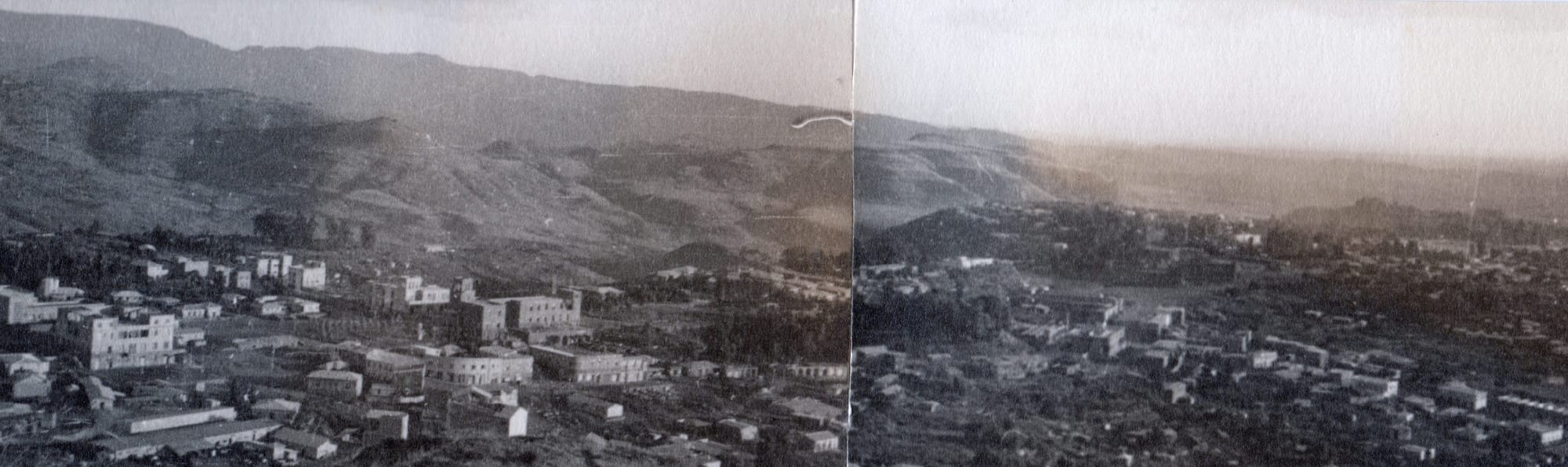
Gondar, the Italian administrative center of the extensive region, though comparatively small, had been developed into a modern town.
Soldiers from Kenya, Uganda, Tanganyika, the Sudan, Ethiopia, the Gold Coast, India, South Africa, Northern Rhodesia, Nyasaland and the United Kingdom, as well as the Belgium Congo's Force Publique and the Free French all participated in the parade to celebrate the fall of Gondar. The Patriots (Arbegnoch) guided by a handful of British Officers and the Ethiopian army had gathered intelligence, conducted sieges, and had cut off Italian escape routes in the mountain passes. They had done much of the fighting in the Battle of Gondar itself.
For Morris Hirsch, it was retracing steps to the escarpment that he had watched impatiently from his tent wondering what lay on the towering heights. He was amazed that so much had been achieved in the Italians brief East African Empire. Reliable road access and communication had been a military necessity because the indigenous population was held in subjugation and civilian traffic always travelled between towns under military escort.
The Field Ambulance took over the hospital, a modern and well equipped facility (for the times). It was a treat to return to living in a building with basic services.
The hospital became the depository for a surfeit of items. The officers were invited to help themselves. Morris experienced the overwhelming sense of articles losing all value when they were there for the taking. First the grab, without regard for use or usefulness to the taker, followed by the discard with the realization that possession was meaningless and burdensome.
Most, if not all, personnel scoured every building for accoutrements and mementoes. The commonest items were cameras and typewriters but there were also swords, daggers, paintings, jewelry, coins and all manner of Italian knick-knacks. Within a day, the buildings were stripped and the tents filled.
It was all quite orderly: Morris knew of no instance of forced acquisition. But the Commanding Officer of the town ordered the return of everything within the day and warned of severe punishment for non-compliance.
Morris purchased a Leica camera (which he used all his life) from an Italian doctor for five pounds and acquired from him a few mementoes, some eye instruments and a dagger, paid for in cigarettes.
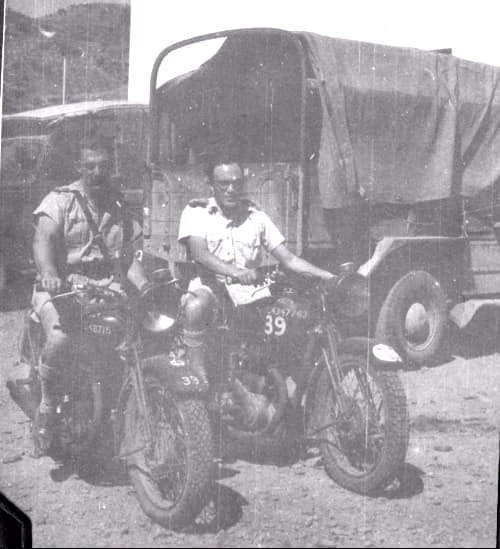
The campaign at an end, Medical Officers Hirsch and Garber took off on their motorbikes, gradually descending the 40 miles from Gondar to Lake Tana, the source of the Blue Nile. Lush green grasslands gave way to drier, stunted tree and bush country, alive with an extraordinary profusion of birds.

The historical novel Whitewashed Jacarandas and its sequel Full of Possibilities are both available on Amazon as paperbacks and eBooks.
These books are inspired by Diana's family's experiences in small town Southern Rhodesia after WWII.
Dr. Sunny Rubenstein and his Gentile wife, Mavourneen, along with various town characters lay bare the racial arrogance of the times, paternalistic idealism, Zionist fervor and anti-Semitism, the proper place of a wife, modernization versus hard-won ways of doing things, and treatment of endemic disease versus investment in public health. It's a roller coaster read.
References:
Excerpt from Dr. Morris Isaac Hirsch's Unpublished Memoirs. Hirsch Archives.
Photo Credits: Hirsch Archives