Whacking El Wak
Morris Hirsch turned around after exploring the extinct volcano at Marsibit in the Northern Frontier of Kenya.

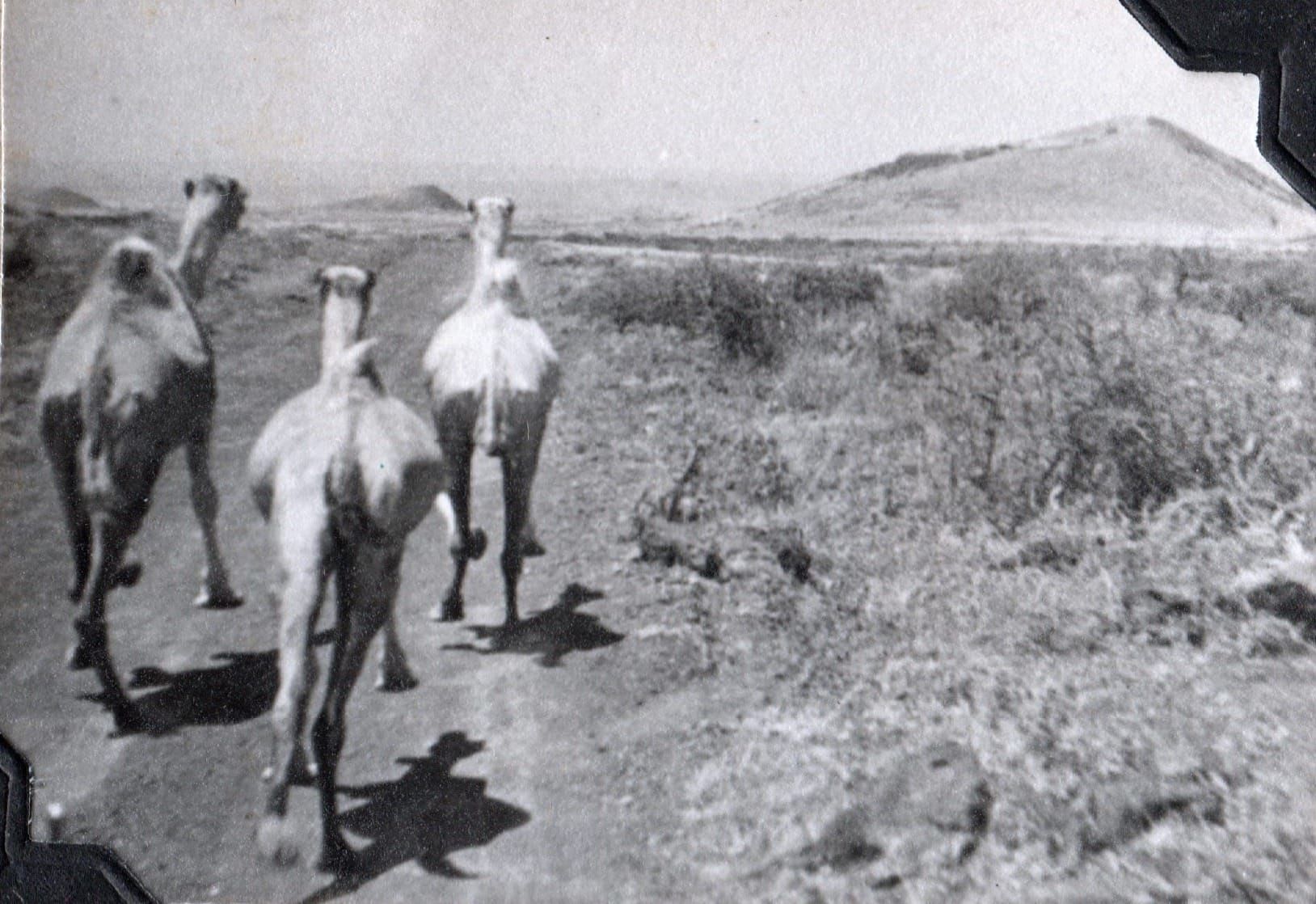
Passing through the desolate last outpost of Isiolo, he reflected that paradoxically, this was where the East African Campaign had all begun just over a year ago. On 13 June 1940, the Italian Air Force raided the base of No. 237 (Rhodesia) Squadron Royal Air Force at Wajir east of Isiolo.
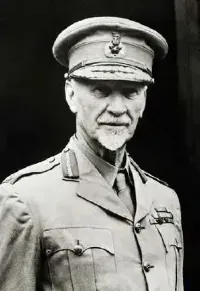
General Jan Smuts, the South African Prime Minister, had commanded the campaign in East Africa in WWI in Tanganyika against the Germans. There had been terrific casualties amongst the soldiers and porters from malaria, deprivation and exhaustion.
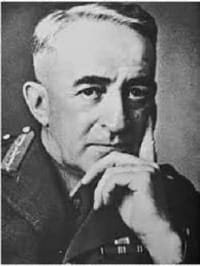
This time, he brought in a renowned tropical disease expert, A.J. Orenstein, who had reformed the compounds and hospitals on South African mines. They resolved to be fully motorized with strong field ambulances to cope with the extreme heat, the severe shortage of water and to facilitate the fast evacuation of casualties.
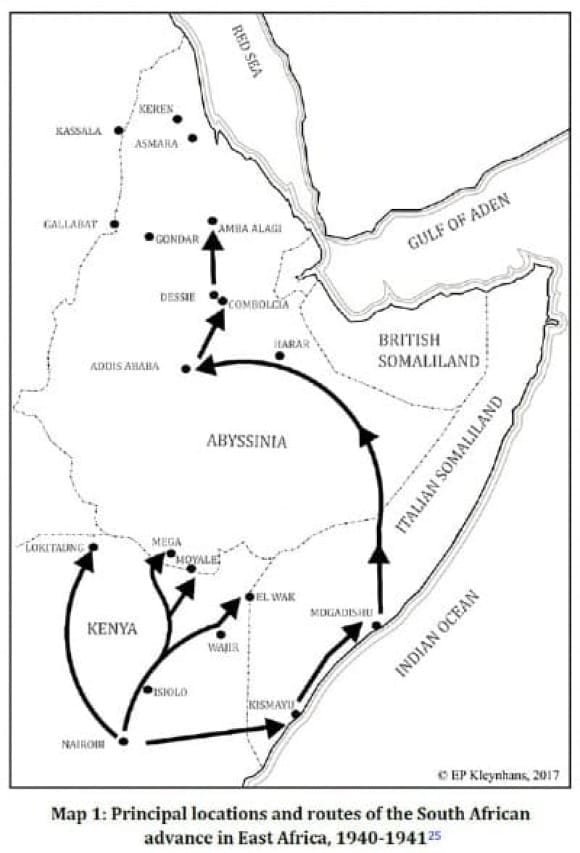
Map makers from the Witwatersrand gold mines remapped the area from aerial photographs and a geographical survey team searched for water supplies. Seizing the water holes in the Marsibit region had been their first strategic step.
General Sir Archibald Wavell, the Commander-in-Chief of the British Middle East Command, directed General Alan Cunningham to retake British Somaliland and free Ethiopia from the Italians.
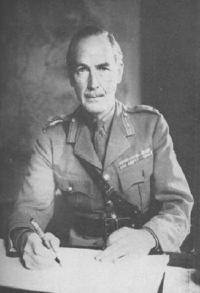
This was the Union Defense Force's (UDF) first foray into WWII. Their mettle would be tested by the First South African Infantry Brigade's (1st South African Div) deployment to East Africa led by Major General George Brink, along with one fighter and two bomber squadrons of the South African Air Force (SAAF).
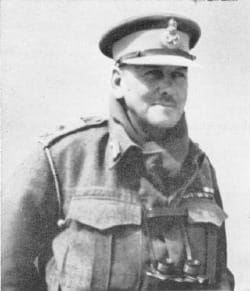
The Battle of El Wak was set for Dingaan's Day (December 16) when, historically, 464 Voortrekkers had prevailed against the onslaught of the Zulu King Dingaan's 16,000 impis at the Battle of Blood River. The 1st SA Div considered this a good omen.
Despite intelligence that they had been spotted by Italian scouts, they proceeded as planned. During the night, South African light tanks trampled a road through the dense scrubland for the infantry to move forward in their wake.
By daybreak, Column A had advanced to a position east of the border cut, and after concentrated artillery fire for ten minutes, the attack on El Wak commenced. The South African tanks led the advance, with Gold Coast infantrymen following in their wake with fixed bayonets. The resistance from the Italians was nominal!
The tanks then advanced towards El Alluand and successfully engaged a strong defensive position. The Italian Air Force disrupted the advance of Column B slightly when it attacked the column’s troop carriers. The East African armored cars wanted the South African infantrymen to screen their advance – foolhardy and antiquated tactics.
So, instead, the Cape Town Rifles (the Dukes) led the advance into British El Wak under the cover of a South African artillery bombardment, to the despair of the defenders. Soon the area was clear of all resistance.
About to be seconded to the 6th Ugandan Field Ambulance, Morris hoped reported tensions between East African Forces and the South Africans were isolated incidents as he headed south for headquarters at Nanyuki northwest of Mount Kenya.

The historical novel Whitewashed Jacarandas and its sequel Full of Possibilities are both available on Amazon as paperbacks and eBooks.
These books are inspired by Diana's family's experiences in small town Southern Rhodesia after WWII.
Dr. Sunny Rubenstein and his Gentile wife, Mavourneen, along with various town characters lay bare the racial arrogance of the times, paternalistic idealism, Zionist fervor and anti-Semitism, the proper place of a wife, modernization versus hard-won ways of doing things, and treatment of endemic disease versus investment in public health. It's a roller coaster read.
References:
M.I. Hirsch Unpublished Memoirs. Hirsch Archives.
Photo Credit: Hirsch Archives
Other Source Material and Map:
E. Kleynhans, “The ‘apostles of terror’: South Africa, the East African campaign, and the Battle of El Wak”, Historia, 63, 2, November 2018, pp 112-137.http://dx.doi.org/10.17159/2309-8392/2018/v63n2a6Copyright: © The Author(s). Published under a Creative Commons Attribution License.
Portraits:
Smuts, Jan: Wikipedia
Orenstein, A.J. Sabinet African Journal.
Alan Cunningham: Wikipedia
Brink, George E. SA Military History.org.
Further reading: Alexander Orenstein's biography: https://journals.co.za/doi/pdf/10.10520/EJC-1e6342bc56