Kenya, the Shangri-La and a Surprise
The rich green beauty of the undulating Kenya Highlands soaked into Morris Hirsch during his stay near Nyeri and Nanyuki and visits to Mathaga.

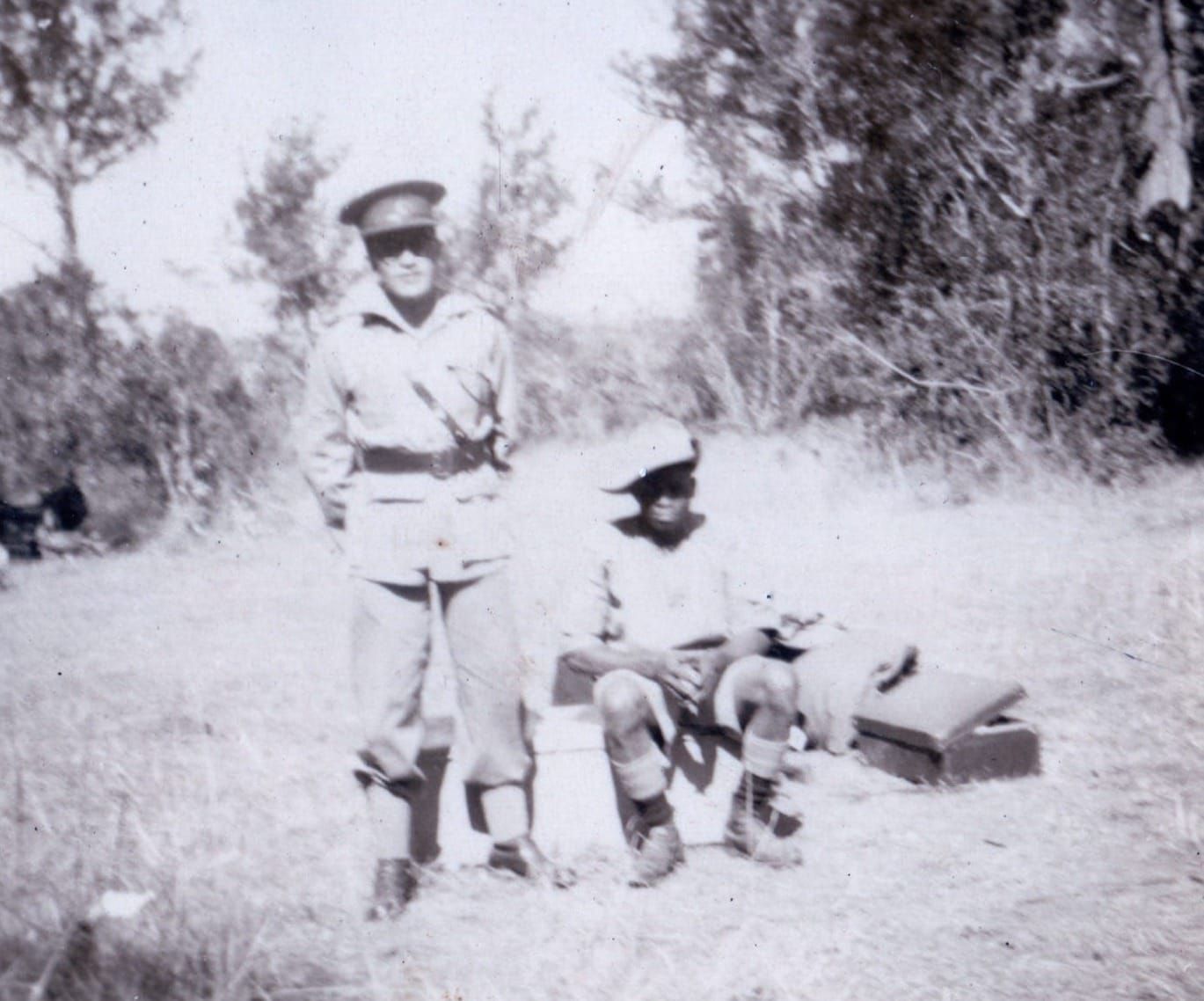
The settler creation out of raw Africa was a monumental achievement in the face of the dangers and tropical diseases of the wilds. To Morris, golfing at the Nyeri Country Club, the affluent homes and the manicured estates brought Shangri-La to life. The benefits to the unsophisticated Kikuyu seemed to balance their labor contribution. The master/servant relationship was mutually beneficial. On the surface it was colonialism at its best.
But the Shangri-La had its blemishes. Malaria and alcohol sapped the White man's strength. Alcohol and sexual license cut into traditional White proprieties to weaken moral fibre and racial status. Education and stoic living nurtured Black wider ambition and a tougher and bolder spirit. Settler behavior, while not arrogant, spelt a confidence which subsequent events were to prove unjustified and lacking appreciation of the psychological processes shaping the future. Morris could not recall any local questioning of the status quo. It was the natural order.
They camped in their tropical gear and tents near the base of Mount Kenya, surprised at the severity of the cold winds that blew down from its frozen summit. Mount Kenya's forbidding sharp twin peaks punch incongruously out of the African plain astride the equator. Though not as high as Kilimanjaro, any thought of climbing it was immediately dispelled by the dense foliage of the lower slopes and the shear rocky projections of its heights. Not to mention retribution by Kikuyu spirits.
The Northern Frontier District was a profound contrast to the Highlands. The natural verdancy and rich agriculture gave way to dry bush, dust and desolation. Morris remembered the village of Isiolo as a collection of dilapidated native huts of weed, cardboard and bits of tin and the people sitting and watching their chickens scratching in the dirt. He remembered a crude shack of corrugated iron and an equally fragile police post, but as you can see from his photograph, it was a substantial administrative center.
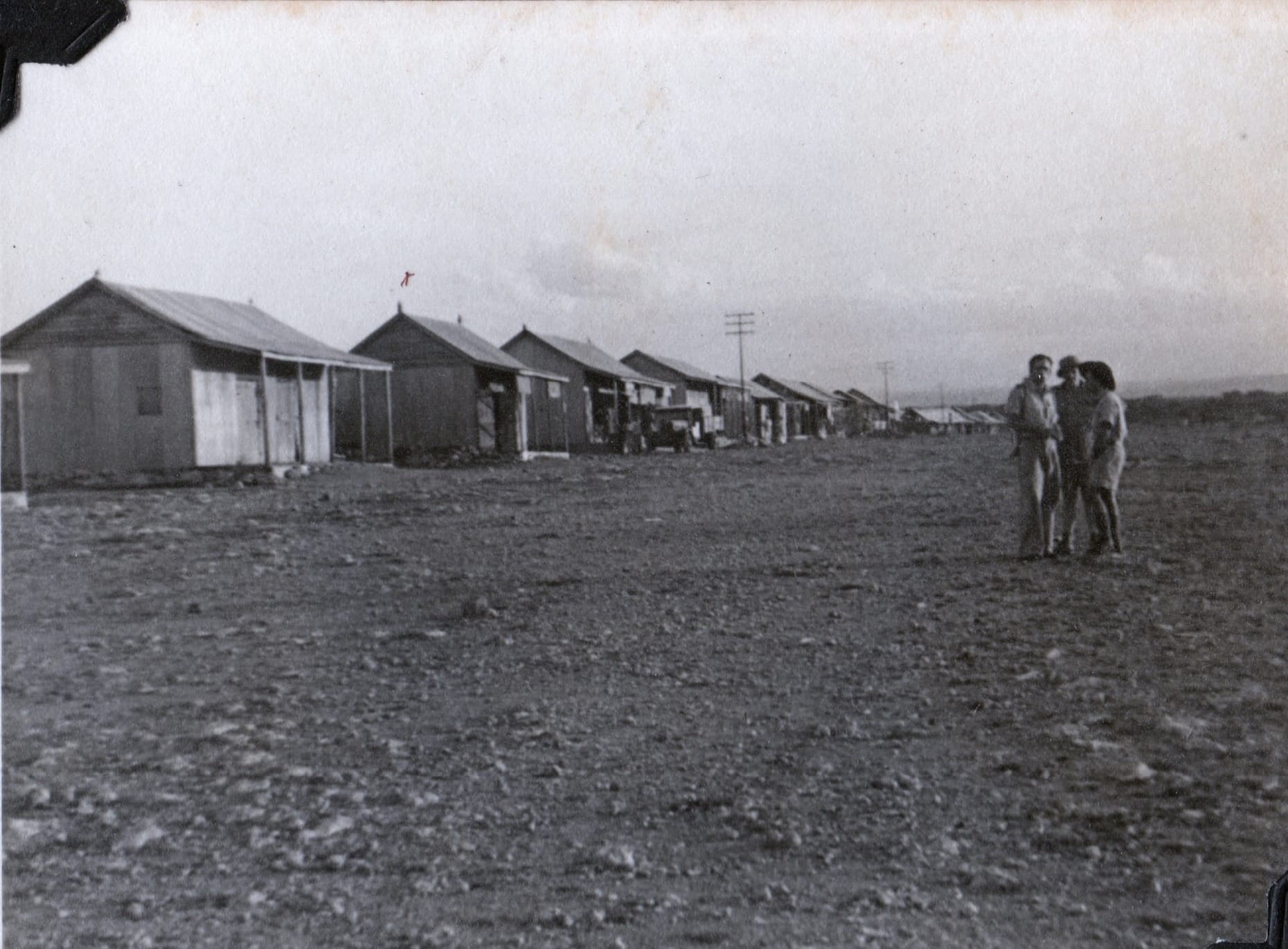
The primitive habitations were set in flat sparse bush terrain with dust and flies when anyone or anything stirred. Morris could not imagine existing in this Kenyan dot on the map with a further three hundred miles of desert to the North, before reaching the Abyssinian border. This was the end, not just the back of beyond! He was anxious to turn around. Just as the remote loneliness began to take hold, with unexpected suddenness, the extinct volcano of Marsibit loomed up.
It was another unusual natural phenomenon to investigate. Morris climbed the wooded slope to the rim to look down in wonder into the cone, densely filled with lush foliage, the product of the rich volcanic soil.
Venturing down into the cone, he was stopped in his tracks by the sound of movement in the brush. Could there be wild animals and danger lurking? He hesitated, uncertain whether to retreat warily or attempt a dash through the dense fernery. However, his indecision was abruptly ended by a beautiful maiden stepping through the leafy masses to tread on his toes. She was closely followed by a middle-aged English gentleman complete with Georgian mustache, peaked cap and plus fours, equally astonished. They turned out to be the District Commissioner showing his visiting daughter the natural jewel of his arid domain.
Morris was grateful orders dictated he had exceeded his turn-around point. Heading back to the base camp at Nanyuki he had time to think over South Africa's first introduction to the East African campaign the year before and wonder what was in store for him.

The historical novel Whitewashed Jacarandas and its sequel Full of Possibilities are both available on Amazon as paperbacks and eBooks.
These books are inspired by Diana's family's experiences in small town Southern Rhodesia after WWII.
Dr. Sunny Rubenstein and his Gentile wife, Mavourneen, along with various town characters lay bare the racial arrogance of the times, paternalistic idealism, Zionist fervor and anti-Semitism, the proper place of a wife, modernization versus hard-won ways of doing things, and treatment of endemic disease versus investment in public health. It's a roller coaster read.
References:
Excerpt from Dr. Morris Isaac Hirsch's Unpublished Memoirs. Hirsch Archives.
Photos: Hirsch Archives