Secondment to the 6th Ugandan Field Ambulance
The three South African Musketeers, George Gosling, Sam Garber and David Goldberg and Morris Hirsch were finally seconded to the 6th Uganda Field Ambulance under the command of Col. Cowan, a Nairobi physician in civilian life.
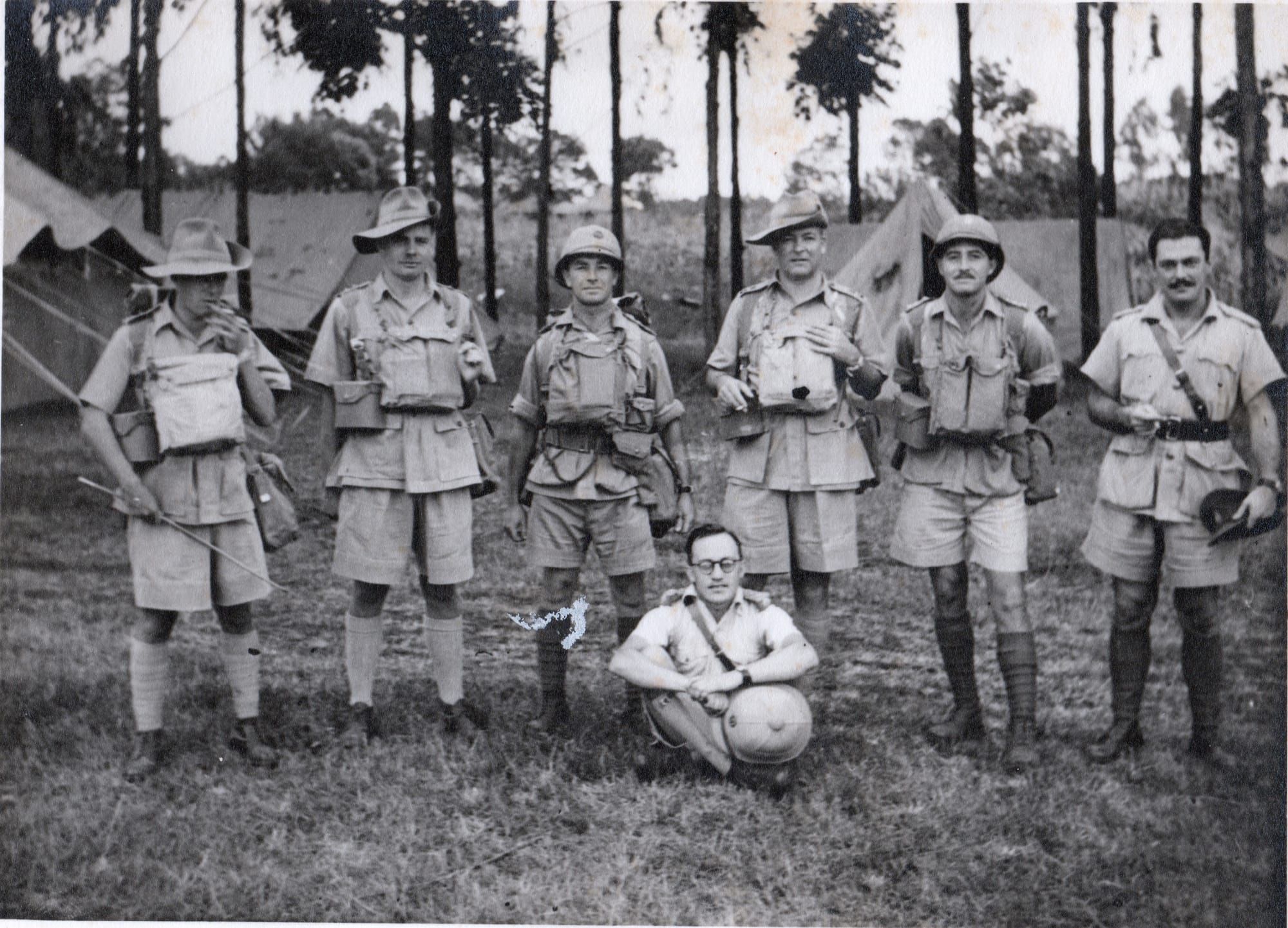
The South Africans were intended to be subservient from the start. East African Medical Officers were appointed to the command positions, while the South Africans were to be the workers under their orders. The 2 IC was a major, a colonial medico from central Tanganyika, obese with a bloated and congested face. Reportedly, he'd been jilted, suffered from isolation and had become an alcoholic.
The two company commanders were arrogant Capt. Neville, newly qualified in Nairobi and Capt. Glen, a diminutive firebrand with a brief experience in general practice in the Kenyan town of El Doret who lorded it over the South Africans, much to their annoyance and resentment. Only Gosling, from a privileged background, in his usual accommodating way, didn't take offense.
The Unit was designated Ugandan because all White administrative officers, adjutant, supply officers, paymaster, and the Black rank and file were Ugandan personnel. The South Africans got on well with them.
Neville was Morris' superior. They had many a caustic brush. The rebel in Morris was ever roused by his impudence, aggravating Morris' recurrent frustration of missing out on the drama in North Africa. (After the war, Morris would have joined Col. Cowan's practice in Nairobi but found Neville already installed as a partner.)
Perhaps not surprisingly, Morris was temporarily seconded as Battalion Medical Officer to the 2/3 Kenya African Rifles, completing training in Nanyuki. They would take part in the final assault on the Italian's final stand in northern Abyssinia.
Morris found the camp hygiene, feeding and malaria precautions below acceptable standards, even stretching those laid down in the South African Medical Corps. His submissions that the troops efficiency depended on maintaining their health were ignored.
The Commanding Officer was curt. "You should be aware there's a war on. No doctor will be allowed to hinder the purpose with finicky impediments. This is East Africa, not South Africa and you had better adjust."
The permanent battalion Medical Officer, Capt. Boles, also a Tanganyikan, returned from leave as the brigade was to move to Eritrea: by train to Mombasa and ship to its port of Massawa, en route to Gondar. To Morris' chagrin, he was ordered to remain on as his assistant, as the transit would call for two medical officers. The reality was a repeat of the Ugandan Field Ambulance experience: the South African Lieutenant does the work and the East African Captain lays down policy, gives the orders and criticizes.
But he was assured he would return to the 6th Ugandan Field Ambulance when they arrived at Massawa.

The historical novel Whitewashed Jacarandas and its sequel Full of Possibilities are both available on Amazon as paperbacks and eBooks.
These books are inspired by Diana's family's experiences in small town Southern Rhodesia after WWII.
Dr. Sunny Rubenstein and his Gentile wife, Mavourneen, along with various town characters lay bare the racial arrogance of the times, paternalistic idealism, Zionist fervor and anti-Semitism, the proper place of a wife, modernization versus hard-won ways of doing things, and treatment of endemic disease versus investment in public health. It's a roller coaster read.
References:
Excerpt from Dr. Morris Isaac Hirsch's Unpublished Memoirs: Hirsch Archives.
Photo Credit: Hirsch Archives